
Sydney Buses
Sydney Buses

Animal
Bus Branch
Animal
Bus Branch
Animal
Bus Branch
A university project tackling Sydney's chronic car dependancy. By making buses faster and more accessible for Sydney’s most car-centric suburbs.
A university project tackling Sydney's chronic car dependancy. By making buses faster and more accessible for Sydney’s most car-centric suburbs.
A university project tackling Sydney's chronic car dependancy. By making buses faster and more accessible for Sydney’s most car-centric suburbs.
Project Management
Project Management
Service Design
Service Design
Concept art & Fabrication
Concept art & Fabrication
Overview
Overview
Overview
The Challenge
The Challenge
The Challenge
Our task was to research & address any problem currently affecting our society, under the metric of the UN Sustainability Goals.
Given a broad brief - I set my sights on Sydney’s severe car dependency and answering the cultural dread Sydneysiders face when navigating the Sydney bus network, UN Sustainability Goal 11 - Sustainable Cities & Communities.
Our task was to research & address any problem currently affecting our society, under the metric of the UN Sustainability Goals.
Given a broad brief - I set my sights on Sydney’s severe car dependency and answering the cultural dread Sydneysiders face when navigating the Sydney bus network, UN Sustainability Goal 11 - Sustainable Cities & Communities.
Our task was to research & address any problem currently affecting our society, under the metric of the UN Sustainability Goals.
Given a broad brief - I set my sights on Sydney’s severe car dependency and answering the cultural dread Sydneysiders face when navigating the Sydney bus network, UN Sustainability Goal 11 - Sustainable Cities & Communities.
The Design Process
The Design Process
1
1
Triangulation of Research
Conducted guerrilla interviews, online ethnography, and mapped out the user journey, then sorted & thematically analysed data into the key insights.
Conducted guerrilla interviews, online ethnography, and mapped out the user journey, then sorted & thematically analysed data into the key insights.
2
2
Concept Ideation
Conducted crazy 8 activities to ideate solutions to alleviate major pain points. I illustrated concept art to help communicate our ideas during our concept proposals.
Conducted crazy 8 activities to ideate solutions to alleviate major pain points. I illustrated concept art to help communicate our ideas during our concept proposals.
3
3
Reflection & Refinement
Concepts ended up not quite hitting the mark - I learned, reflected and clarified the problem area and refocused our efforts in creating an effective final solution.
Concepts ended up not quite hitting the mark - I learned, reflected and clarified the problem area and refocused our efforts in creating an effective final solution.
Discovery
Discovery
Discovery
Just How many cars are there?
Just How many cars are there?
Just How many cars are there?
The answer is alot.
The answer is alot.
The answer is alot.
According to the Australian Bureau of Statistics, 6.5 million people commute to work by car, with only 377,043 travelling via bus services.
That's a ratio of 17:1.
According to the Australian Bureau of Statistics, 6.5 million people commute to work by car, with only 377,043 travelling via bus services.
That's a ratio of 17:1.
According to the Australian Bureau of Statistics, 6.5 million people commute to work by car, with only 377,043 travelling via bus services.

Annual Car and Bus Trips - Size Comparison Visualised
Annual Car and Bus Trips - Size Comparison Visualised
Research
Research
Research
why do Sydneysiders Hate Buses?
why do Sydneysiders Hate Buses?
why do Sydneysiders Hate Buses?

Percentage of residences by suburb within 400m of public transport stop with services at least every 30 minutes in Sydney, NSW - RMIT University
Percentage of residences by suburb within 400m of public transport stop with services at least every 30 minutes in Sydney, NSW - RMIT University
Severe lack of accessible bus route services
Severe lack of accessible bus route services
Only 35% of homes in Sydney have a public transport stop within 400 metres of their home that runs at least every 30 minutes.
Only 35% of homes in Sydney have a public transport stop within 400 metres of their home that runs at least every 30 minutes.
Only 35% of homes in Sydney have a public transport stop within 400 metres of their home that runs at least every 30 minutes.
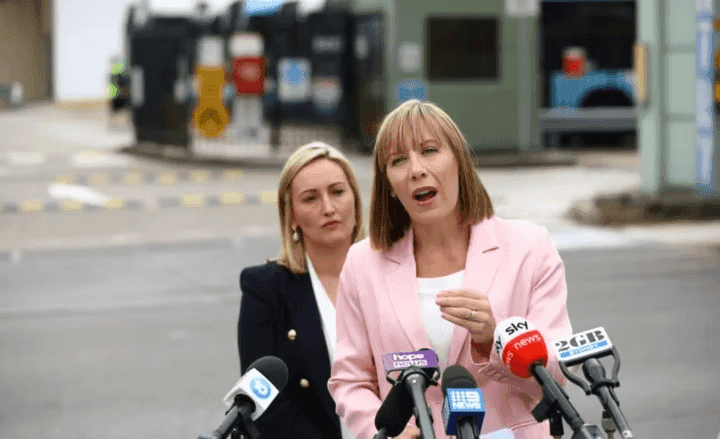
NSW Minister for Transport Jo Haylen making her address on bus privatisation at Randwick bus depot
NSW Minister for Transport Jo Haylen making her address on bus privatisation at Randwick bus depot
Delays & cancellations are commonplace
Delays & cancellations are commonplace
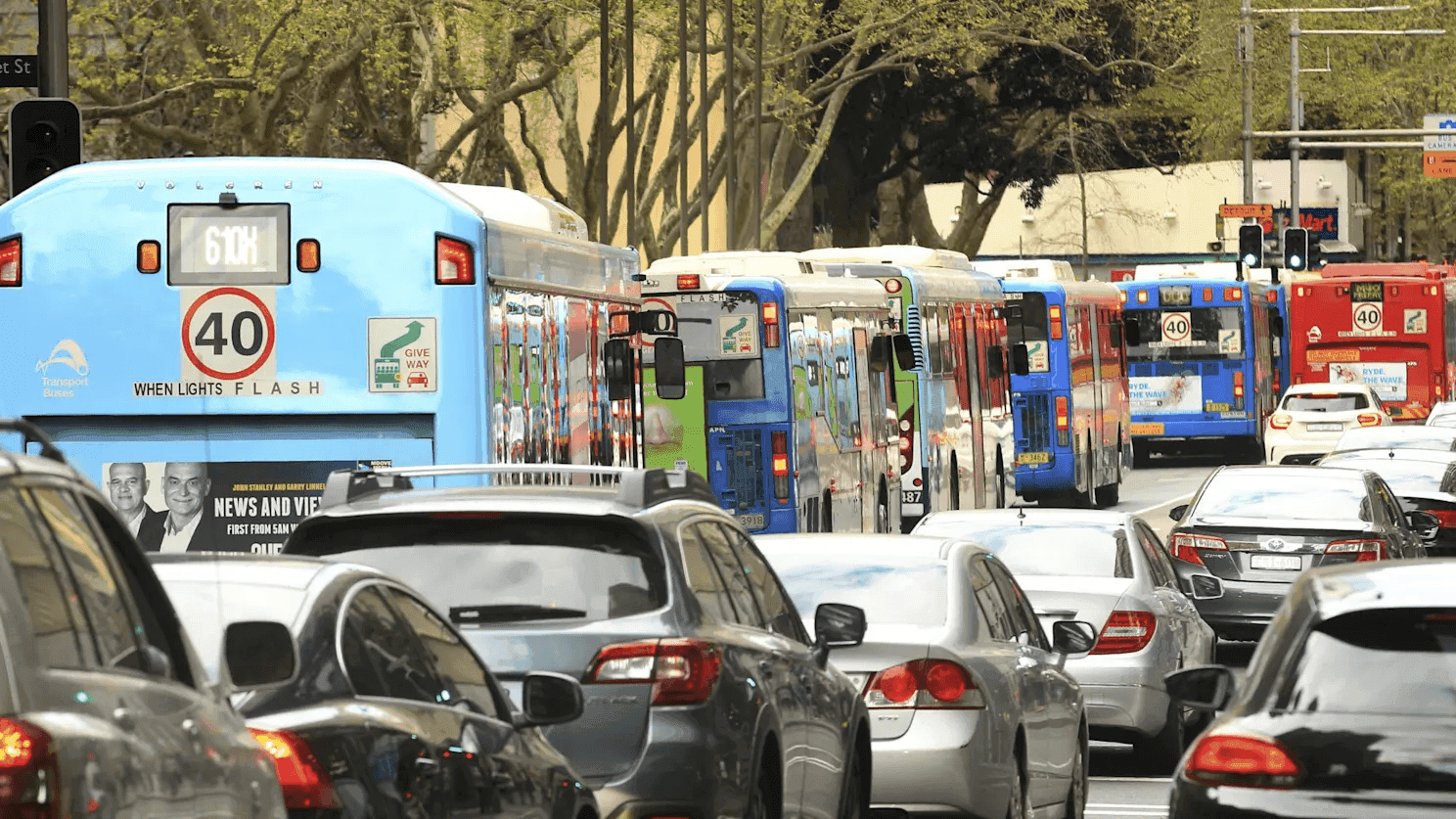
Privatisation of buses has caused significant delays in service & cancellation of routes. According to 9news, bus contracts penalised bus drivers who were running late, making financially beneficial to cancel the bus rather than continue running late services.
Privatisation of buses has caused significant delays in service & cancellation of routes. According to 9news, bus contracts penalised bus drivers who were running late, making financially beneficial to cancel the bus rather than continue running late services.
Privatisation of buses has caused significant delays in service & cancellation of routes. According to 9news, bus contracts penalised bus drivers who were running late, making financially beneficial to cancel the bus rather than continue running late services.

Sydney's expensive public transport system - 7NEWS
Sydney's expensive public transport system - 7NEWS
Perception that buses are more expensive - even when it’s not
Perception that buses are more expensive - even when it’s not
In Joshua Godfrey’s study “What is the cost of a commute?’ A driver would be expected to pay $10,698 a year while a person who doesn’t own a car at be saving $8328 a year. 59% of Australians report that transport costs is one of their primary deciding factors.
In Joshua Godfrey’s study “What is the cost of a commute?’ A driver would be expected to pay $10,698 a year while a person who doesn’t own a car at be saving $8328 a year. 59% of Australians report that transport costs is one of their primary deciding factors.
In Joshua Godfrey’s study “What is the cost of a commute?’ A driver would be expected to pay $10,698 a year while a person who doesn’t own a car at be saving $8328 a year. 59% of Australians report that transport costs is one of their primary deciding factors.
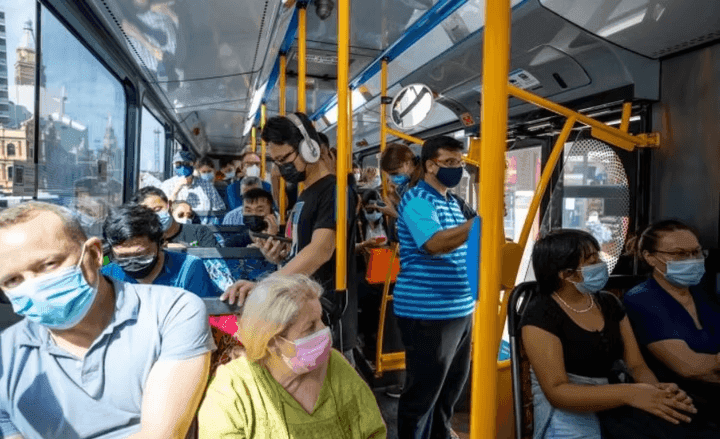
'We risk a second wave': Photo shows packed Sydney bus during morning peak hour: 9news
'We risk a second wave': Photo shows packed Sydney bus during morning peak hour: 9news
Catalyst for many
awful experiences
Catalyst for many awful experiences
Catalyst for many
awful experiences
Packed buses during rush hour are very uncomfortable, especially post covid.
70% of bus stops offer no shelter, shade or seating forcing commuters to be exposed to the elements.
Constant vigilance - The onus is on the commuter to maintain visibility with the bus driver in order to flag the bus down.
Packed buses during rush hour are very uncomfortable, especially post covid.
70% of bus stops offer no shelter, shade or seating forcing commuters to be exposed to the elements.
Constant vigilance - The onus is on the commuter to maintain visibility with the bus driver in order to flag the bus down.
Packed buses during rush hour are very uncomfortable, especially post covid.
70% of bus stops offer no shelter, shade or seating forcing commuters to be exposed to the elements.
Constant vigilance - The onus is on the commuter to maintain visibility with the bus driver in order to flag the bus down.
Primary Research
Primary Research
Primary Research
Asking the Public
Asking the Public
Asking the Public
We conducted primary research to build a deeper understanding of the bus journey and the user experience at the level of the daily commuter. Using triangulation to across check results & reduce bias.
We conducted primary research to build a deeper understanding of the bus journey and the user experience at the level of the daily commuter. Using triangulation to across check results & reduce bias.
We conducted primary research to build a deeper understanding of the bus journey and the user experience at the level of the daily commuter. Using triangulation to across check results & reduce bias.
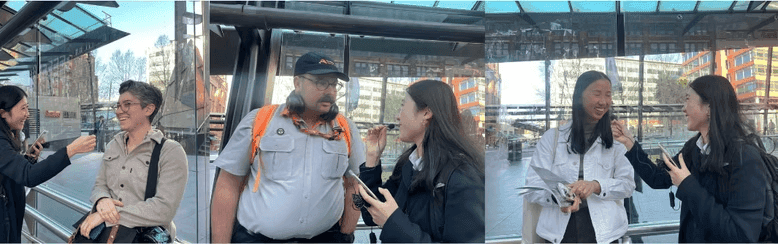
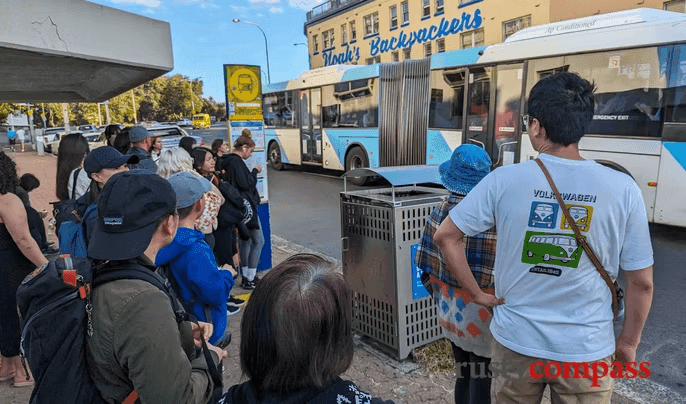
Guerriilla Interviews at Central Bus Stop asking why they decided to take the bus today


Online Ethnography - 50 Quotes from Online sources speaking on they're experiences with Sydney Buses

User Journey Map created to simulate the entire bus riding experience and attributed pain points at each action
Online Ethnography - 50 Quotes from Online sources speaking on they're experiences with Sydney Buses
Guerriilla Interviews at Central Bus Stop asking why they decided to take the bus today
User Journey Map created to simulate the entire bus riding experience and attributed pain points at each action
Guerriilla Interviews at Central Bus Stop asking why they decided to take the bus today
Online Ethnography - 50 Quotes from Online sources speaking on they're experiences with Sydney Buses
User Journey Map created to simulate the entire bus riding experience and attributed pain points at each action
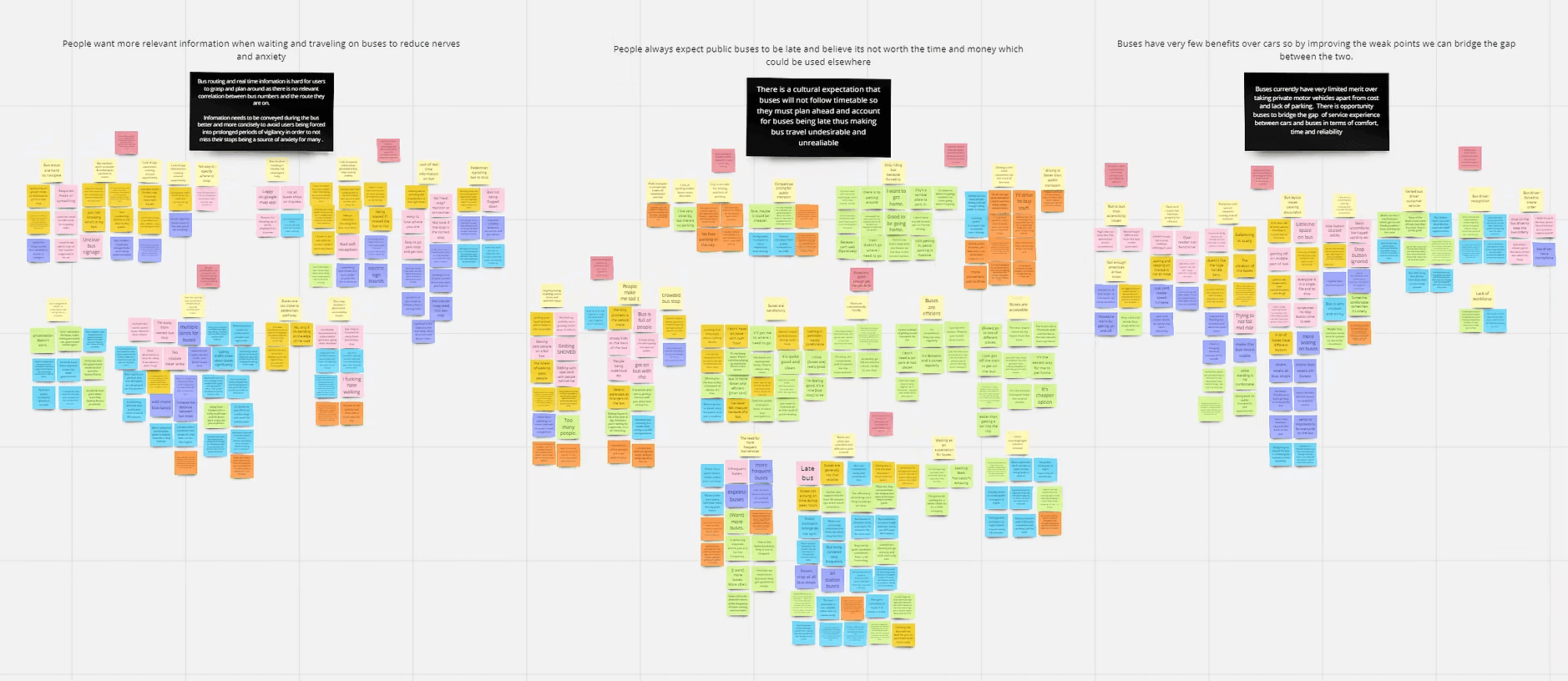
Thematic Analysis conducted in Miro Board
Our Key Insights
Our Key Insights
Our Key Insights
Severe lack of real-time information
- Commuters must stay alert at all stages of the bus journey, getting on the right bus, waving the bus down, knowing which stop to get off at.
Severe lack of real-time information
- Commuters must stay alert at all stages of the bus journey, getting on the right bus, waving the bus down, knowing which stop to get off at.
Severe lack of real-time information
- Commuters must stay alert at all stages of the bus journey, getting on the right bus, waving the bus down, knowing which stop to get off at.
Bus numbers don’t mean anything
- No relevant correlation between bus numbers and route, often multiple numbers will lead you to the same location.
Bus numbers don’t mean anything
- No relevant correlation between bus numbers and route, often multiple numbers will lead you to the same location.
Bus numbers don’t mean anything
- No relevant correlation between bus numbers and route, often multiple numbers will lead you to the same location.
Cultural expectation that buses do not follow the timetable
- Buses can show up early or late and its up to the commuter to ‘plan ahead’
Cultural expectation that buses do not follow the timetable
- Buses can show up early or late and its up to the commuter to ‘plan ahead’
Cultural expectation that buses do not follow the timetable
- Buses can show up early or late and its up to the commuter to ‘plan ahead’
Cars are simply better
- In terms of comfort, time efficiency and convenience, cars win.
Cars are simply better
- In terms of comfort, time efficiency and convenience, cars win.
Cars are simply better
- In terms of comfort, time efficiency and convenience, cars win.
Concept Ideation
Concept Ideation
Concept Ideation
Improvements To Sydney Buses
Improvements To Sydney Buses
Through crazy 8 activities & refinement, we came up with a series of ideas that would alleviate the major paint points bus riders encounter.
I created & illustrated the annotated concept art, while my teammate spearheaded the storyboards.
Through crazy 8 activities & refinement, we came up with a series of ideas that would alleviate the major paint points bus riders encounter.
I created & illustrated the annotated concept art, while my teammate spearheaded the storyboards.
Through crazy 8 activities & refinement, we came up with a series of ideas that would alleviate the major paint points bus riders encounter.
I created & illustrated the annotated concept art, while my teammate spearheaded the storyboards.
Dial & Go Stop Button
A small device that allows users to preset their stop destination at the start of their journey and signals the commuter when approaching their destination.

Animalfied Bus Stop
Bus stops infused with upgraded digital animal facilities which provide real-time information of upcoming buses.


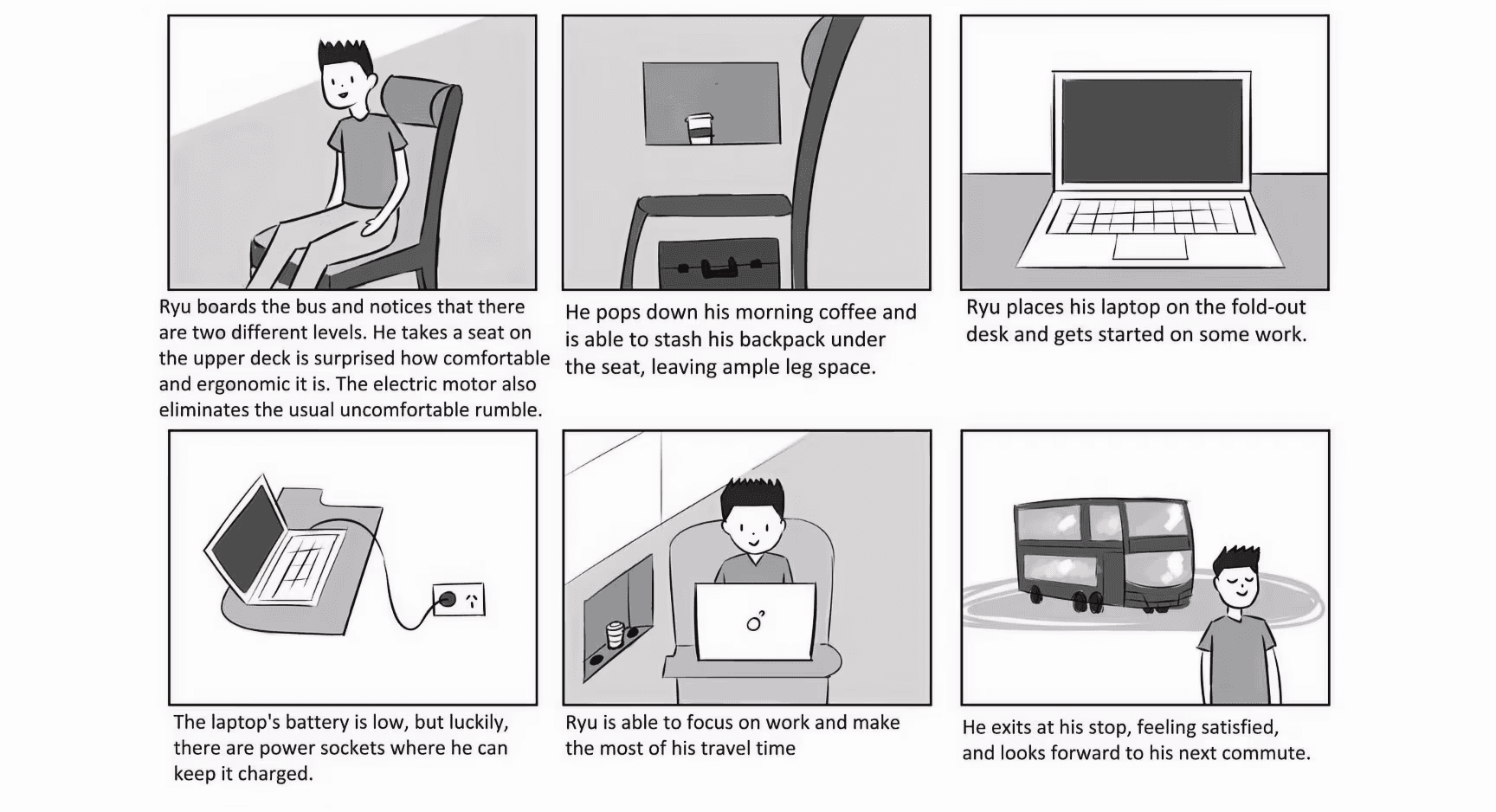
Productivity Pod
A fleet of double-decker buses with more comfortable seating, a side nook to store small objects, storage spaces for bags and a pull-up table attached to the side.

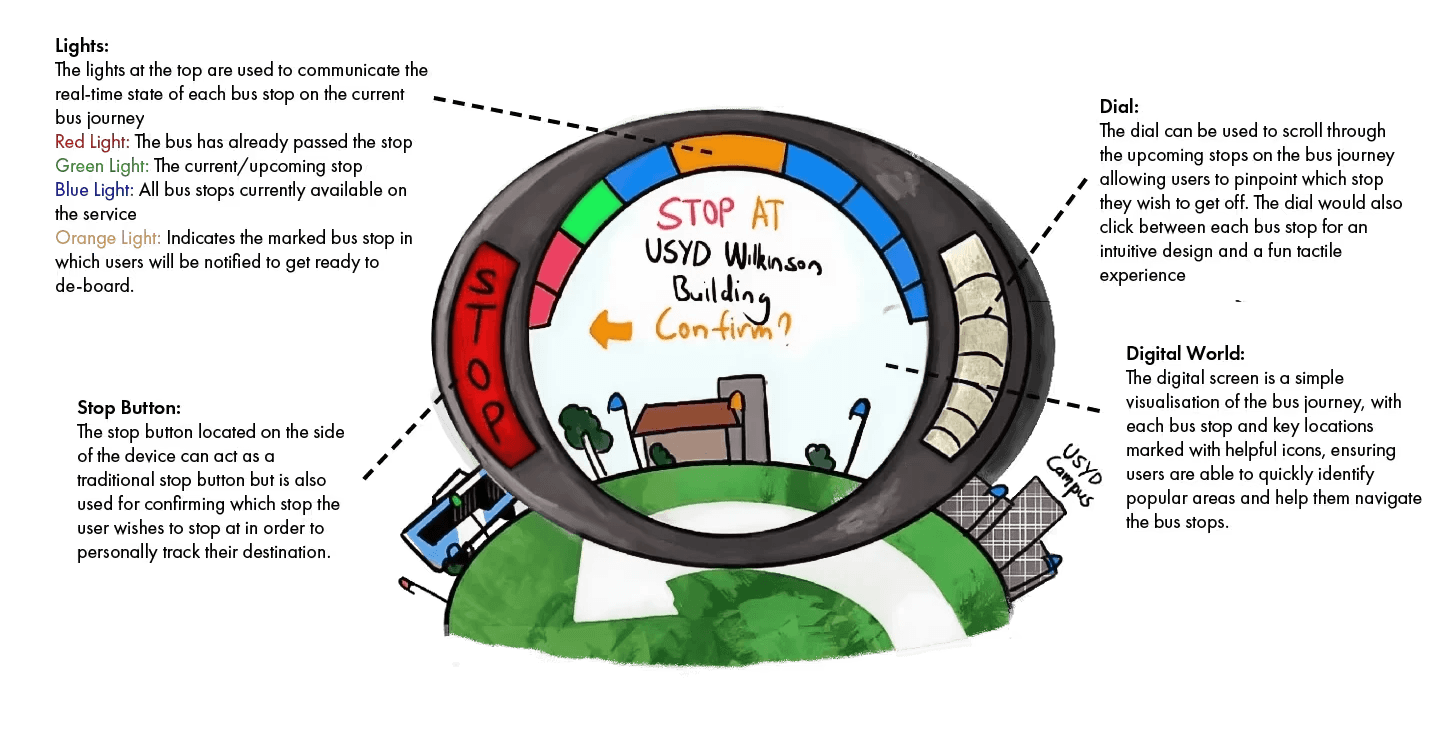
Dial & Go Stop Button
A small device that allows users to preset their stop destination at the start of their journey and signals the commuter when approaching their destination.
Animalfied Bus Stop
Bus stops infused with upgraded digital animal facilities which provide real-time information of upcoming buses.
Productivity Pod
A fleet of double-decker buses with more comfortable seating, a side nook to store small objects, storage spaces for bags and a pull-up table attached to the side.
Dial & Go Stop Button
A small device that allows users to preset their stop destination at the start of their journey and signals the commuter when approaching their destination.
Animalfied Bus Stop
Bus stops infused with upgraded digital animal facilities which provide real-time information of upcoming buses.
Productivity Pod
A fleet of double-decker buses with more comfortable seating, a side nook to store small objects, storage spaces for bags and a pull-up table attached to the side.
Concept Reflection
Concept Reflection
Concept Reflection
Sadly, none of the concepts quite hit the mark
Sadly, none of the concepts quite hit the mark
Sadly, none of the concepts quite hit the mark
The current state of negative bus perception is largely a proponent of systemic issues, such as late services, unreliability and inaccessibility.
Our concepts were primarily quality of life updates and frankly over-engineered. Lacking the power to significantly impact Sydney’s car dominance. This realisation led me to take a step back and redirect our attention back to our primary goal - solving car dependency.
The current state of negative bus perception is largely a proponent of systemic issues, such as late services, unreliability and inaccessibility.
Our concepts were primarily quality of life updates and frankly over-engineered. Lacking the power to significantly impact Sydney’s car dominance. This realisation led me to take a step back and redirect our attention back to our primary goal - solving car dependency.
The current state of negative bus perception is largely a proponent of systemic issues, such as late services, unreliability and inaccessibility.
Our concepts were primarily quality of life updates, lacking the power to significantly impact Sydney’s car dominance. This realisation led me to pivot and redirect our attention back to our primary goal - solving car dependency.
EUREKA!!! Target those MOST RELIANT on cars... To elevate buses to the STANDARD OF CARS...
EUREKA!!! Target those MOST RELIANT on cars... To elevate buses to the STANDARD OF CARS...
EUREKA!!! Target those MOST RELIANT on cars... To elevate buses to the STANDARD OF CARS...
A specialised bus Route - no cars allowed!
A specialised bus Route - no cars allowed!
A specialised bus Route - no cars allowed!
I made the observation that buses were treated as ‘second-class’ vehicles on our roads. With standard bus lanes being open to general traffic outside of peak hours - No more!
A strict, permanent bus priority route opens up the opportunity to integrate the Feeder Lane Service Model. Multiple feeder routes would run to and from car-reliant areas, then leverage priority infrastructure to drastically speed up services beyond car travel.
I made the observation that buses were treated as ‘second-class’ vehicles on our roads. With standard bus lanes being open to general traffic outside of peak hours - No more!
A strict, permanent bus priority route opens up the opportunity to integrate the Feeder Lane Service Model. Multiple feeder routes would run to and from car-reliant areas, then leverage priority infrastructure to drastically speed up services beyond car travel.
I made the observation that buses were treated as ‘second-class’ vehicles on our roads. With standard bus lanes being open to general traffic outside of peak hours - No more!
A strict, permanent bus priority route opens up the opportunity to integrate the Feeder Lane Service Model. Multiple feeder routes would run to and from car-reliant areas, then leverage priority infrastructure to drastically speed up services beyond car travel.
Brings public transport closer to those who previously had no options to alternative transport
Brings public transport closer to those who previously had no options to alternative transport
A faster, more direct bus route minimising commute time
A faster, more direct bus route minimising commute time
Reduces need to transition between transportation modes, making travel more convenient and less complicated.
Reduces need to transition between transportation modes, making travel more convenient and less complicated.

Cars driving in bus lanes outside of peak hours
Cars driving in bus lanes outside of peak hours

Feeder Route Model
Feeder Route Model

Parramatta Road - ‘Boulevard of broken dreams’ - The Guardian
Parramatta Road - ‘Boulevard of broken dreams’ - The Guardian

WestConnex M4 Motorway running parallel to Parramatta Road
WestConnex M4 Motorway running parallel to Parramatta Road
Stealing Parramatta Road
away from drivers
Stealing Parramatta Road
away from drivers
Stealing Parramatta Road
away from drivers
Parramatta Road is at the heart of Sydney's
car dependency problem.
Parramatta Road is at the heart of Sydney's car dependency problem.
Parramatta Road is at the heart of Sydney's car dependency problem.
Labelled as the ugliest road in Sydney - rundown abandoned businesses, graffiti, terrible noise pollution
Labelled as the ugliest road in Sydney - rundown abandoned businesses, graffiti, terrible noise pollution
Often busy and heavily grid-locked during peak hours
Often busy and heavily grid-locked during peak hours
Residents living in the surrounding suburbs of Parramatta Road are forced to drive - heavily car dependent especially on the north side.
Residents living in the surrounding suburbs of Parramatta Road are forced to drive - heavily car dependent especially on the north side.
Parramatta Road’s popularity can be attributed to its infamy being a toll dodge, running parallel to the WestConnext M4.
As both roads share the same purpose, transforming Parramatta Road into a bus-only priority fixture, many homes will have renewed public transport access to the 2 major economic hubs in Sydney CBD & Parramatta and force drivers to take existing toll road infrastructure or slower side routes to further de-incentivise car usage.
Parramatta Road’s popularity can be attributed to its infamy being a toll dodge, running parallel to the WestConnext M4.
As both roads share the same purpose, transforming Parramatta Road into a bus-only priority fixture, many homes will have renewed public transport access to the 2 major economic hubs in Sydney CBD & Parramatta and force drivers to take existing toll road infrastructure or slower side routes to further de-incentivise car usage.
Parramatta Road’s popularity can be attributed to its infamy being a toll dodge, running parallel to the WestConnext M4.
As both roads share the same purpose, transforming Parramatta Road into a bus-only priority fixture, many homes will have renewed public transport access to the 2 major economic hubs in Sydney CBD & Parramatta and force drivers to take existing toll road infrastructure or slower side routes to further de-incentivise car usage.
The Downs Thomson Paradox states “the equilibrium speed of car traffic on a road network is determined by the average door-to-door speed of equivalent journeys taken by public transport or the next best alternative."
- Anthony Downs and John Michael Thomson
By removing access to Parramatta Road, commuters would naturally adjust until the speed of buses and cars becomes equal. This effectively reduces the number of cars on the road and increases travel speed for all.
The Downs Thomson Paradox states “the equilibrium speed of car traffic on a road network is determined by the average door-to-door speed of equivalent journeys taken by public transport or the next best alternative."
- Anthony Downs and John Michael Thomson
By removing access to Parramatta Road, commuters would naturally adjust until the speed of buses and cars becomes equal. This effectively reduces the number of cars on the road and increases travel speed for all.
The Downs Thomson Paradox states “the equilibrium speed of car traffic on a road network is determined by the average door-to-door speed of equivalent journeys taken by public transport or the next best alternative."
- Anthony Downs and John Michael Thomson
By removing access to Parramatta Road, commuters would naturally adjust until the speed of buses and cars becomes equal. This effectively reduces the number of cars on the road and increases travel speed for all.
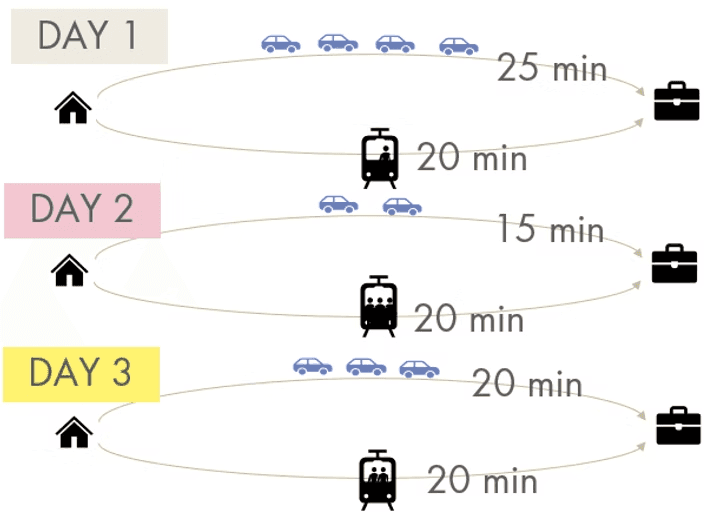
Downs-Thomson Paradox Visualised by Taina Haapamäki
Downs-Thomson Paradox Visualised by Taina Haapamäki
Concept Reflection
Concept Reflection
Concept Reflection
Circling back to
our initial Concepts
Circling back to
our initial Concepts
Circling back to
our initial Concepts

Animalfied Bus Stop - Illustrated by me
With the theory behind our new solution clear, I reflected upon our initial concepts and extracted the most impactful and synergistic elements.
The Animal Bus Stop drastically improves bus navigation by making bus stops more differentiable and intuitive to both native and foreign travelers.
Its also fun, silly and sparks joy, nudging urban planners to better utilise public spaces as a way of celebrating Australian heritage, our culture, our native animals and Indigenous art.
With the theory behind our new solution clear, I reflected upon our initial concepts and extracted the most impactful and synergistic elements.
The Animal Bus Stop drastically improves bus navigation by making bus stops more differentiable and intuitive to both native and foreign travelers.
Its also fun, silly and sparks joy, nudging urban planners to better utilise public spaces as a way of celebrating Australian heritage, our culture, our native animals and Indigenous art.
With the theory behind our new solution clear, I reflected upon our initial concepts and extracted the most impactful and synergistic elements.
The Animal Bus Stop drastically improves bus navigation by making bus stops more differentiable and intuitive to both native and foreign travelers.
Its also fun, silly and sparks joy, nudging urban planners to better utilise public spaces as a way of celebrating Australian heritage, our culture, our native animals and Indigenous art.
Refinement
Refinement
Refinement
Low Fidelity Prototyping & User Testing
Low Fidelity Prototyping & User Testing
Low Fidelity Prototyping & User Testing
To bring the Animal bus branch to life, I ran a series of co-design workshops, think-aloud protocols and roleplaying exercises, gaining insights on what matters most to commuters.
To bring the Animal bus branch to life, I ran a series of co-design workshops, think-aloud protocols and roleplaying exercises, gaining insights on what matters most to commuters.
To bring the Animal bus branch to life, I ran a series of co-design workshops, think-aloud protocols and roleplaying exercises, gaining insights on what matters most to commuters.
Large surface area so pedestrians aren't impeded by waiting commuters
Large surface area so pedestrians aren't impeded by waiting commuters
Opposing directions from a centralised point - alleviates the issue where you're on the wrong side of the road and you need to loop all the way around to get to the bus stop
Opposing directions from a centralised point - alleviates the issue where you're on the wrong side of the road and you need to loop all the way around to get to the bus stop
Real-time displays for upcoming buses
Real-time displays for upcoming buses

Low Fidelity Prototype - Rough Spacing of Bus Stations and Key areas


Bus Stop Co-Design Workshop & Thematic Analysis


Bus Stop Co-Design Workshop - Thematic Analysis
Low Fidelity Prototype - Rough Spacing of Bus Stations and Key areas
Bus Stop Co-Design Workshop & Thematic Analysis
Bus Stop Co-Design Workshop - Thematic Analysis
Low Fidelity Prototype - Rough Spacing of Bus Stations and Key areas
Bus Stop Co-Design Workshop & Thematic Analysis
Bus Stop Co-Design Workshop - Thematic Analysis

User Testing Fair - Testing the Physicality of the Bus Stop
User Testing Fair - Testing the Physicality of the Bus Stop

Assigning Each Station the Perfect Animal
Assigning Each Station the Perfect Animal


UX roleplaying exercise: Can commuters get off at the right stop?
UX roleplaying exercise: Can commuters get off at the right stop?
FINAL SOLUTION
FINAL SOLUTION
FINAL SOLUTION
Animal Bus Branch - Model Prototype
Animal Bus Branch - Model Prototype
The Animal Bus Branch is a new hyperspeed bus priority system that stretches across Sydney from Parramatta to Sydney CBD, transforming buses to a speedier alternative to cars.
Using the feeder lane mode, multiple bus routes would then converge and begin to stop at each station connecting the most car-dependent suburbs to Sydney CBD, allowing urban planners to target specific areas in dire need of better public transportation.
As a team we created the scale model with 3d printed models, custom illustrated Aboriginal murals, animal bus stop stickers and I created the map art through Adobe Illustrator, laser cutting the design at USYD's DMaF Lab.
The Animal Bus Branch is a new hyperspeed bus priority system that stretches across Sydney from Parramatta to Sydney CBD, transforming buses to a speedier alternative to cars.
Using the feeder lane mode, multiple bus routes would then converge and begin to stop at each station connecting the most car-dependent suburbs to Sydney CBD, allowing urban planners to target specific areas in dire need of better public transportation.
As a team we created the scale model with 3d printed models, custom illustrated Aboriginal murals, animal bus stop stickers and I created the map art through Adobe Illustrator, laser cutting the design at USYD's DMaF Lab.
The Animal Bus Branch is a new hyperspeed bus priority system that stretches across Sydney from Parramatta to Sydney CBD, transforming buses to a speedier alternative to cars.
Using the feeder lane mode, multiple bus routes would then converge and begin to stop at each station connecting the most car-dependent suburbs to Sydney CBD, allowing urban planners to target specific areas in dire need of better public transportation.
As a team we created the scale model with 3d printed models, custom illustrated Aboriginal murals, animal bus stop stickers and I created the map art through Adobe Illustrator, laser cutting the design at USYD's DMaF Lab.

Animal Bus Branch Tabletop model - Featuring the Emu Stop and Kookaburra Stop
Animal Bus Branch Tabletop model - Featuring the Emu Stop and Kookaburra Stop

Dynamic Shot of Kookaburra Stop

Emu and Kookaburra Statues

Real-time bus arrival displays

Solar Panels on top of Bus Stop Shelter

Sheltered areas to protect commutes from the elements
Dynamic Shot of Kookaburra Stop
Emu and Kookaburra Statues
Real-time bus arrival displays
Solar Panels
Sheltered areas
Emu and Kookaburra Statues
Real-time bus arrival displays
Dynamic Shot of Kookaburra Stop
Solar Panels on top of Bus Stop Shelter
Sheltered areas to protect commutes from the elements

Laser Cut Map of Animal Bus Branch Proposed Route
Laser Cut Map of Animal Bus Branch Proposed Route

Seating & Custom Aboriginal Murals
Seating & Custom Aboriginal Murals
Animal Bus Branch - Key Benefits
Animal Bus Branch - Key Benefits
Animal Bus Branch
Key Benefits

Permanent Bus Priority
Permanent Bus Priority
Bus only lane drastically reduce amount of slowing down and re-acceleration both from longer distances between stations and the absence of cars.
Bus only lane drastically reduce amount of slowing down and re-acceleration both from longer distances between stations and the absence of cars.
Bus only lane drastically reduce amount of slowing down and re-acceleration both from longer distances between stations and the absence of cars.

Accessible Transport for Car-Dependant Suburbs
Accessible Transport for Car-Dependant Suburbs
Accessible Transport for Car-Dependant Suburbs
Feeder routes can be established quickly to remote areas, removing the necessity for daily car commutes.
Feeder routes can be established quickly to remote areas, removing the necessity for daily car commutes.
Feeder routes can be established quickly to remote areas, removing the necessity for daily car commutes.

Re-writing Cost Perception
Re-writing Cost Perception
Ex-Parramatta Road drivers forced to take the M4 toll road will rethink which transport mode is most cost effective.
Ex-Parramatta Road drivers forced to take the M4 toll road will rethink which transport mode is most cost effective.
Ex-Parramatta Road drivers forced to take the M4 toll road will rethink which transport mode is most cost effective.

Improved Bus Navigation & Clarity
Improved Bus Navigation & Clarity
Distinctive and easy to communicate, allowing commuters to use animal stops as primary landmarks during their journey.
Distinctive and easy to communicate, allowing commuters to use animal stops as primary landmarks during their journey.
Distinctive and easy to communicate, allowing commuters to use animal stops as primary landmarks during their journey.

Cultural Celebration
Cultural Celebration
The native Australian Animals and Aboriginal Mosaic Murals enrich the public spaces with Sydney’s cultural heritage.
The native Australian Animals and Aboriginal Mosaic Murals enrich the public spaces with Sydney’s cultural heritage.
The native Australian Animals and Aboriginal Mosaic Murals enrich the public spaces with Sydney’s cultural heritage.

Bringing Life back to Parramatta Road
Bringing Life back to Parramatta Road
Bringing Life back to Parramatta Road
More foot traffic opens opportunities for pedestrian-friendly businesses acting as generators of urban vitality and sociability.
More foot traffic opens opportunities for pedestrian-friendly businesses acting as generators of urban vitality and sociability.
More foot traffic opens opportunities for pedestrian-friendly businesses acting as generators of urban vitality and sociability.
Reflection
Reflection
Reflection
Final Thoughts & Project Reflection
Final Thoughts & Project Reflection
Final Thoughts & Project Reflection
I am very proud of this project - being my first experience with project management, I’ve learnt so much about navigating the problem space, bolstering morale, moving toward clarity, and ultimately creating a thoroughly-considered solution.
There are far more considerations outside the scope of my current expertise. However I like to believe the essence the project sets a gentle reminder to fellow designers and urban planners that we have the ability to shape the world around us for the better, utilising public spaces as a way to spark joy, support inclusivity and create positive human experiences.
I am very proud of this project - being my first experience with project management, I’ve learnt so much about navigating the problem space, bolstering morale, moving toward clarity, and ultimately creating a thoroughly-considered solution.
There are far more considerations outside the scope of my current expertise. However I like to believe the essence the project sets a gentle reminder to fellow designers and urban planners that we have the ability to shape the world around us for the better, utilising public spaces as a way to spark joy, support inclusivity and create positive human experiences.
I am very proud of this project - being my first experience with project management, I’ve learnt so much about navigating the problem space, bolstering morale, moving toward clarity, and ultimately creating a thoroughly-considered solution.
There are far more considerations outside the scope of my current expertise. However I like to believe the essence the project sets a gentle reminder to fellow designers and urban planners that we have the ability to shape the world around us for the better, utilising public spaces as a way to spark joy, support inclusivity and create positive human experiences.